A Brief Overview of Farcaster and Warpcast
Recently, the buzz around Farcaster and Warpcast has been incessant in the crypto scene. These platforms, referred to as social networking services (SNS), have a structure quite different from last year's Friend.tech. While Friend.tech had a Ponzi-like structure, Farcaster and Warpcast fortunately operate as legitimate social platforms. We'll discuss why Farcaster and Warpcast have become popular towards the end, but first, let's briefly go over their structure.
The primary difference between Farcaster and Warpcast is that Farcaster is a broad protocol, while Warpcast is an app that utilizes this protocol. This means that various apps can use Farcaster in the future, and if they use the wallet created by Warpcast, they can display the same content visible on Warpcast. In other words, posts, likes, shares, follows, and other interactions on Warpcast are not functionalities of Warpcast itself but of the Farcaster protocol. Farcaster is sometimes referred to as the boundary between Web 2 and Web 3 because the posts, follows, and reactions generated on Warpcast are not stored on the blockchain. They are not stored on Warpcast either (though they are stored for speed) but are instead stored on a 'hub' that shares Farcaster's data via a P2P method, allowing Warpcast's records to be shared with new apps.
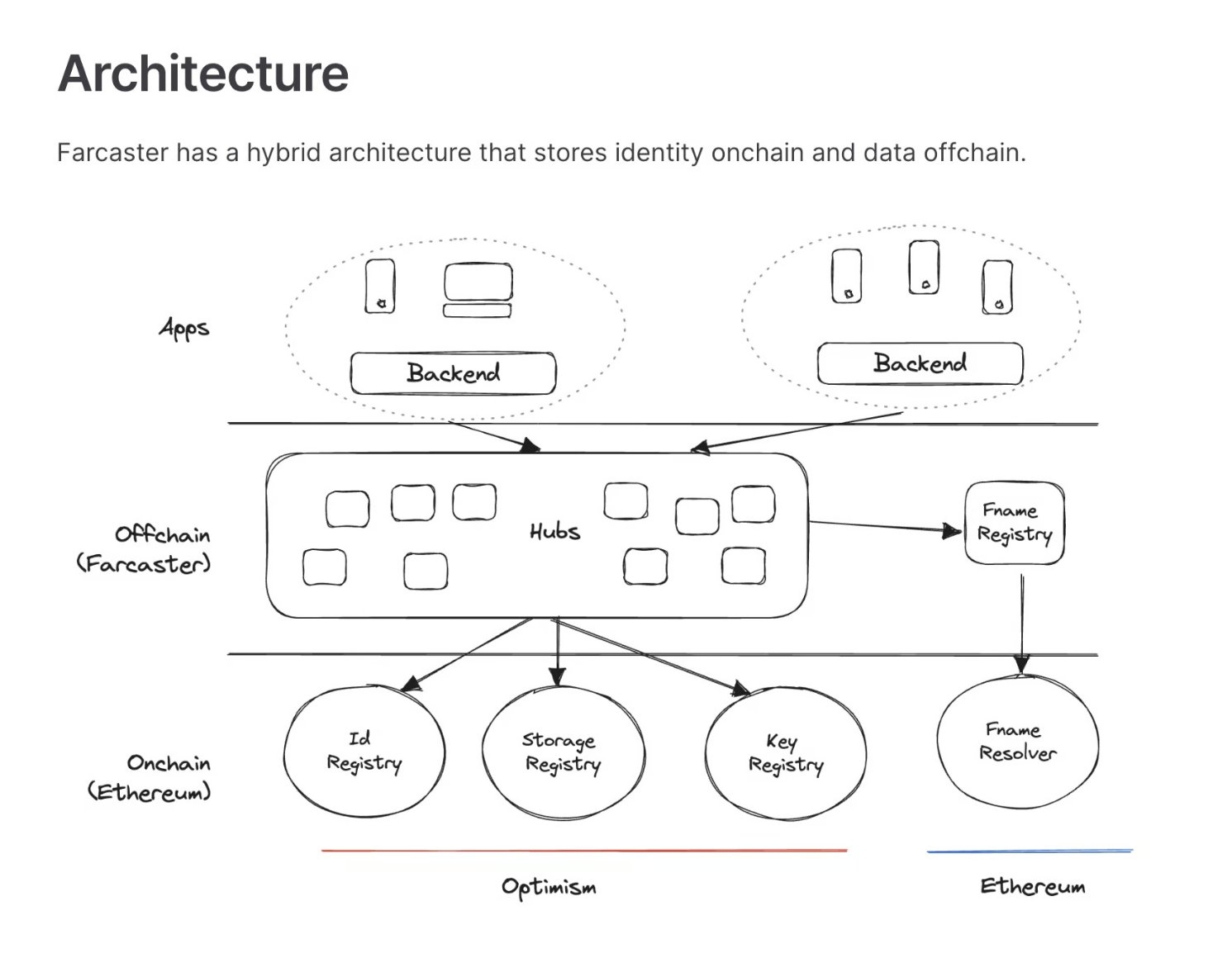
Screenshots show that the id registry, storage registry, key registry, etc., are stored on the blockchain using the Optimism network. When joining Warpcast, users are issued a unique number, the FID, through the IdRegistry. An Ethereum address can receive one FID, which is transferrable. A small number of FIDs can be sold at high prices. The created FID is used for the storageRegistry and keyRegistry; the storageRegistry records the renting of an account's storage, and the keyRegistry is used for registering an account to sign. Joining Warpcast involves a payment, partly due to the storageRegistry. Unlike Twitter, where users can tweet as they wish, Farcaster's protocol allows for up to 5000 casts (tweets) per storage unit. This limits message capacity, preventing unlimited use of the 'hub's' resources. If more messages are needed, users can rent storageRegistry multiple times. If the limit is exceeded, older messages are sequentially deleted. Warpcast simplifies this process by allowing users to sign up, creating a new Ethereum address and issuing an FID.
The Farcaster protocol stores FID, Signer, and recovery addresses on the blockchain, and messages or reactions using FID and Signer are shared with each FID through the hub. Warpcast, integrating these features, is Farcaster's first app. Despite not seeming incredibly special, Warpcast's sudden spotlight is due to the introduction of Frames. Comparing Warpcast to Twitter:
Cast = Tweet
Recast = Retweet
Frame = Sharing a URL on a tweet
Warpcast's Frames allow for more diverse actions since each account has an Ethereum address and owns tokens. The most common use is free minting. By posting a Frame with a free minting button on a cast, anyone can mint by pressing the button. This convenience, bypassing the need for airdrop tasks or quests, is why Frames are popular. Conditions like having a certain number of specific tokens or follower counts can also be set for minting, attracting collectors to Warpcast. Additionally, leaving a comment with "{number} $Degen" rewards the cast owner with that token, reviving the tipping culture not prevalent in Web 2.
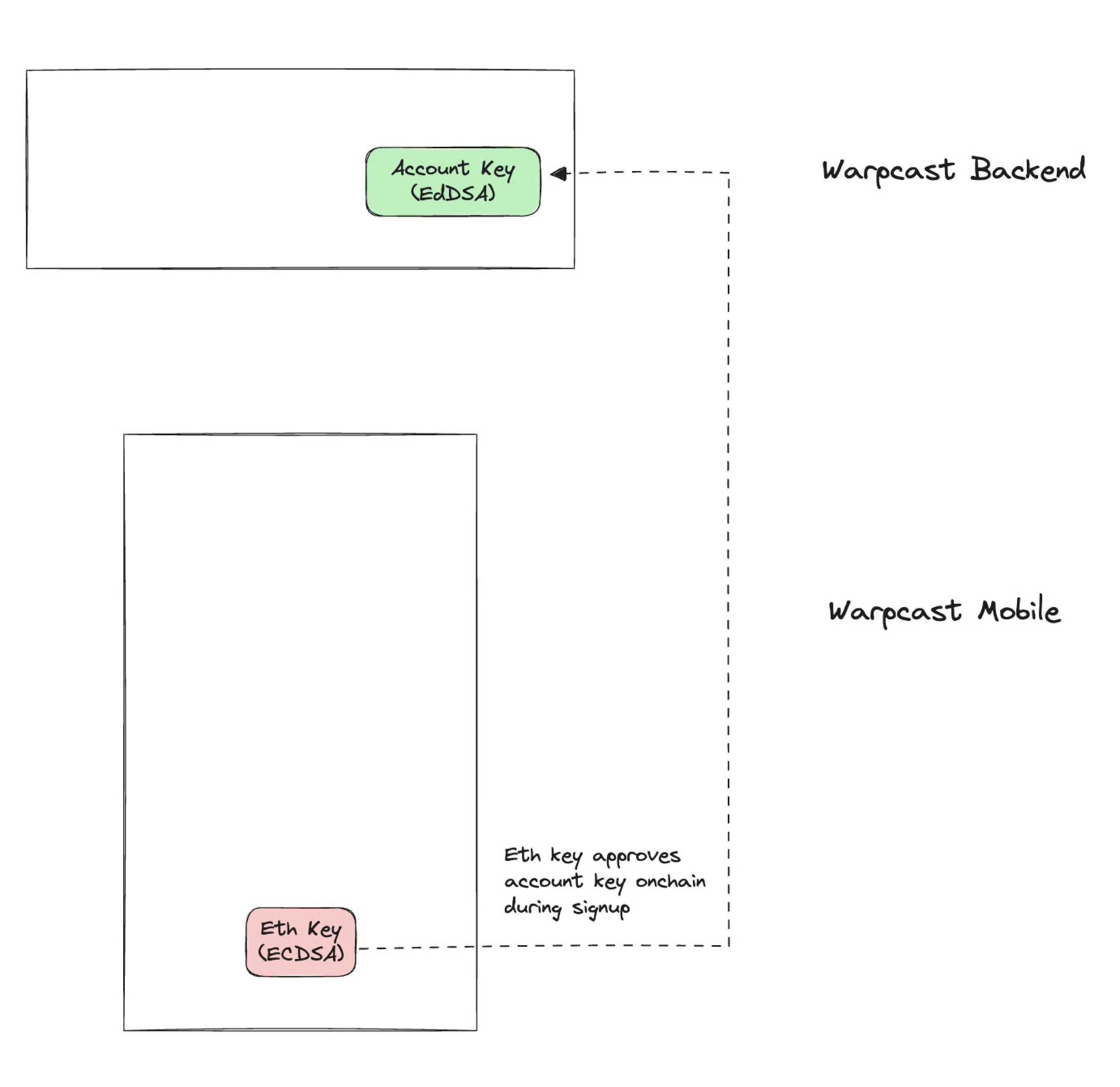
The possibility of Frames is due to Warpcast's account structure, with the crucial Ethkey stored on the phone, controlling the entire account and generated Ethereum address. However, frequent use of the Ethkey is risky due to its importance. Thus, Warpcast's backend uses an account key (Signer) for actions within Frames, sending messages, and reactions.
Despite the current simplicity of creating Frames and the curiosity for new ones, many are being developed. Although it's still early, with few Farcaster-supported services and sparse documentation, the potential for Frames to entertain users will likely dictate Warpcast's future. If Frames remain limited to Minting without offering unique fun or if they're not exclusive to Web 3, Farcaster may fade away. It's hard to predict what Frames or new functionalities and apps will bring excitement, but it's agreed that Warpcast has showcased a promising direction for Web 3 social platforms, marking a significant moment since Steemit.
Image source:
Generated through OpenAI's DALL·E
https://twitter.com/dwr