The Introduction of Proto-Danksharding.. What is Proto-Danksharding?
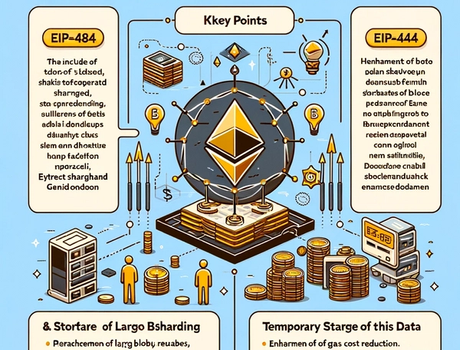
The Ethereum Dencun upgrade is currently underway on the Sepolia testnet. Successful completion today will lead to further testing on the Holesky testnet on February 7th, with the mainnet upgrade anticipated in March, possibly during the Eth Denver event in late February or early March. This upgrade, featuring the Proto-Danksharding (EIP-4844) component, is garnering attention for its potential to boost rollups or Layer 2 usability, a critical aspect of Ethereum's network development.
Proto-Danksharding introduces Blob data storage, shifting the network's focus from maximizing transaction numbers to maximizing Blob data capacity. Blobs, or Binary Large OBjects, are used for storing substantial data amounts, similar to handling multimedia files. This method addresses the high gas costs associated with storing extensive Layer 2 rollup data on the mainnet. By storing this data in the consensus layer's beacon nodes, and not in the blocks, for about three weeks, gas costs are significantly reduced. Afterward, only a KZG 'commitment' remains as proof of the data's prior existence. This approach allows for large-scale data storage without EVM usage, offering an economical alternative to the conventional 'gas' fee system and ensuring immunity to Ethereum's gas price fluctuations.
Each Blob is approximately 128kb, and plans are in place to eventually store up to 16 Blobs per block, totaling around 2MB. This is a considerable increase from the current Ethereum block size of about 0.1683MB. Initially, the system will store only 6 Blobs, which could notably enhance the usability of rollups like Arbitrum and Optimism. Previously, even Layer 2 blockchains were impacted by Ethereum's gas fees, making rollups relatively costly. This upgrade could align rollup chain costs with those of Polygon. For instance, token swaps on Arbitrum may drop from 0.5-0.6 dollars to as low as 0.025 dollars, making them competitive with Polygon's fees.

Cheaper fees could stimulate new applications and solutions, fostering a cycle of scalability enhancements. This update signifies Ethereum's strategic move from sharding-based to rollup-centric scalability solutions, marking a slow yet progressive change in its roadmap towards Danksharding, data sharding, and full sharding.
Image source: Generated through OpenAI's DALL·E