Thoughts on Web 3 Games
The concept of "Web 3 games" has been around for some time now. However, since the initial release of Axie Infinity, no game has matched its impact. Despite numerous releases and even major gaming companies joining in, most efforts seem to fall short. It's overly simplistic to blame the market alone, considering the vast number of games being released. In my view, Web 2 and Web 3 games are entirely different genres; the Web 2 gaming model doesn't easily translate to Web 3. I'm not an expert in gaming, but it appears that successful Web 3 projects differ significantly from Web 2 applications, suggesting that games will also diverge.
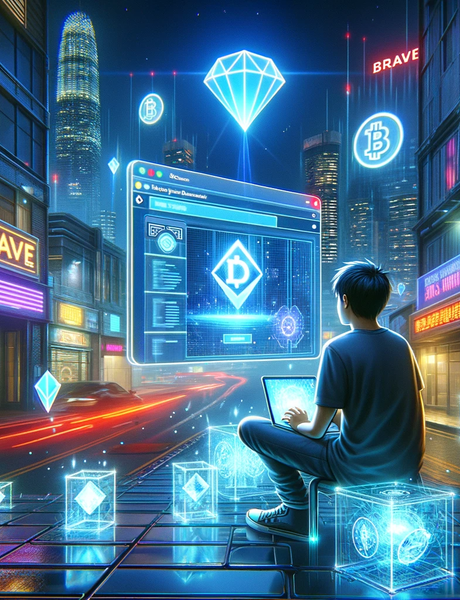
One example I often cite is the Brave Browser. Finding another example like Brave Browser, which has been successful for some time, illustrates the challenge in creating a successful Web 3 project. Brave Browser, similar to Chrome, shows ads periodically, rewarding users with BAT tokens for viewing these ads. The demand for BAT tokens stems from the advertisers. Users typically earn about 2 to 3 dollars per month. According to Brave Browser's data, the number of active users rose from 24 million in 2020 to 59 million in 2023. This steady increase in users, regardless of market conditions, and the receipt of BAT tokens, to an extent, categorizes them as Web 3 users. Personally, I use Brave Browser, but it falls short of Chrome in several aspects. However, I've replaced Opera and Firefox with Brave Browser. While 2 to 3 dollars isn’t much, I often use Brave Browser for general browsing and news. Once accustomed, there's little incentive to switch back to other browsers.
The primary distinction between Brave Browser and other browsers is the "X to Earn" model, where users earn through browsing. Without token rewards, Brave Browser, as a typical Web 2 application, wouldn't have attracted as much interest. This is a key advantage of Web 3 projects. More people still use Opera or Firefox, and they may be more convenient, but the token rewards, albeit small, make Brave Browser my secondary browser.
Many Web 3 projects aim to utilize blockchain over servers. However, for users, the storage medium of their data—server or blockchain—doesn't matter much. What’s intriguing is that while traditional Web 2 application points are just numbers on a server, in Web 3, they become tradable assets. Had Brave Browser used points instead of BAT tokens and offered additional features after accumulating points, it might not have grown as much. Server-based point trading between users is challenging. In Brave Browser, rewards are given as BAT tokens, which users can keep, sell, or lend. I believe this assetization of rewards should be the focus of Web 3 projects. Apart from Brave Browser, Axie Infinity and Uniswap are examples of successful Web 2 to Web 3 transitions. In Axie Infinity, players received SLP tokens, having full control over these assets. Most players sold their SLP tokens immediately, affecting the price, a consequence of player actions, not the game company. Uniswap differs from traditional exchanges by returning transaction fees as profits to coin depositors.
Excluding infrastructure-providing applications like marketplaces or wallets, few Web 3 applications directly involving tokens or NFTs have succeeded without offering rewards. After the popularity of Play to Earn (P2E), there's been a shift towards prioritizing game quality. While I partly agree, I still believe P2E is crucial. If rewards aren't necessary, then blockchain usage is redundant. If the rewards hold no value, receiving unsellable tokens or NFTs is akin to server points. The blockchain, requiring user wallet transactions, adds complexity, making Web 3 unnecessary if it doesn't offer monetizable rewards. Web 2 already facilitates the trading of valuable items effectively.
P2E is important, but recent Web 3 games are taking odd approaches. They reward active Discord engagement or referrals with early game access or NFT purchasing rights, often benefiting only a few. Some Web 3 games claim to be free but restrict earnings to paying players. This approach seems unsustainable. Why would thousands anticipate an unreleased Web 2 game and engage in Discord activities? The current Web 3 game release process seems unnatural. I don't believe these Ponzi-like games represent the future of Web 3 games. Successful Web 3 games, like Axie Infinity, meet certain criteria:
- The game's tokens must have value, allowing players to sell if they choose.
- The game should be accessible to all, offering small but quick rewards to a large player base.
- A stakeholder group should benefit from using the token, like advertisers.
- A certain level of game quality is necessary.
Axie Infinity struggled because it lacked a strong stakeholder group, diminishing reward value. Brave Browser's growth is due to its usability and the exchangeability of BAT tokens. Advertisers seeking to reach Brave users ensure token circulation and user growth. However, meeting these conditions in games, which have shorter lifespans than applications, is challenging. Without meeting these criteria, there's little reason to make a game Web 3.
Ultimately, the significance of rewards in Web 3 games is crucial, yet it's important to maintain a balance. While the fun aspect remains the primary reason for choosing a game, the allure of earning potential should not overshadow the game's inherent entertainment value. If the primary attraction of a game becomes its earning potential, its longevity and appeal might suffer. In practical terms, working a regular job could be more profitable than playing a game for income.
This concept is mirrored in my use of the Brave Browser. If Brave Browser had been less user-friendly, I would have disregarded its small financial rewards. My primary reason for using Brave Browser is not the reward itself; it’s the convenience it offers. The reward is merely an added benefit, enhancing the overall experience. This principle holds true in the realm of gaming as well. If Brave Browser offered only negligible earnings, I would have likely preferred a more functional browser. Similarly, in the gaming world, games that are enjoyable in their own right and offer substantial rewards will likely become a significant consideration in the Web 3 gaming market. The key is to strike a fine balance - ensuring that the game is enjoyable first and foremost, with the rewards serving as a bonus, not the main attraction.
Image Source: Generated through OpenAI's DALL·E.